
Bryce Canyon National Park
Complete guide to Bryce Canyon National Park covering all major hoodoo formations, hiking trails, viewpoints, photography tips, visitor planning

✍️ Written by: nearme.help Experienced Writing Team
This comprehensive guide is researched and compiled by the nearme.help National Parks writing team — experienced travel writers, outdoor recreation specialists, and professional content creators with extensive field experience documenting America's national parks and public lands.
📅 Published: | 🔄 Last Updated: | ⏰️ Reading Time: ~22 minutes
📚 Sources: National Park Service (NPS.gov), Wikimedia Commons, Visit Utah, Bryce Canyon Country, Recreation.gov, USGS, International Dark-Sky Association, Canyonlands Natural History Association
🏜️ The Ultimate Guide to Bryce Canyon National Park: Hoodoos, Trails & Insider Tips for an Unforgettable Visit
World's Largest Hoodoo Collection • Top Hiking Trails • Amphitheater Viewpoints • Stargazing • 2026 Visitor Planning
Sources: NPS.gov, Wikimedia Commons, Visit Utah, Bryce Canyon Country | Compiled: March 2026
🏜️ Bryce Canyon National Park — Visitor Information
Plan your visit to the world's largest collection of hoodoos — Paunsaugunt Plateau, Southern Utah
🗺️ Park Overview & Introduction
Bryce Canyon National Park is located in southwestern Utah on the eastern edge of the Paunsaugunt Plateau, roughly 80 miles northeast of Zion National Park. Despite its name, Bryce Canyon is not actually a canyon — it is a series of 12 natural amphitheaters carved into the plateau's edge, filled with thousands of brilliantly colored hoodoo formations. The park was named after Mormon settler Ebenezer Bryce, who homesteaded in the area in 1875 and famously described the canyon as “a hell of a place to lose a cow.”
Established as a National Monument on June 8, 1923, and upgraded to National Park status on September 15, 1928, Bryce Canyon covers 35,835 acres (56 square miles) and welcomes over 2.5 million visitors annually. The park sits at a remarkably high elevation — between 6,620 and 9,115 feet — giving it a distinctly cooler climate than nearby Zion or Grand Canyon. The main scenic drive stretches 18 miles from the park entrance to Rainbow Point, passing 13 major viewpoints along the way.


🪨 Geology & Formation — 60 Million Years in the Making
The geological story of Bryce Canyon begins approximately 60 million years ago during the late Cretaceous and early Tertiary periods, when the entire region was covered by an ancient lake and floodplain system. Over millions of years, sediments accumulated on the lake bottom, forming the Claron Formation — a layer of limestone, siltstone, and sandstone that would become the foundation for the hoodoos we see today.
What Exactly Is a Hoodoo?
A hoodoo is a tall, thin spire of rock formed by erosion, typically topped by a harder capstone that protects the softer rock beneath. Hoodoos can range from the size of a person to heights exceeding 200 feet. They often appear in whimsical shapes — resembling castles, chimneys, cathedrals, or even people frozen in stone. Nowhere on Earth has as many hoodoos as Bryce Canyon.
The Three-Step Recipe for Hoodoos
- Deposition of Rocks: Ancient lake and floodplain sediments were deposited as flat-lying rock layers approximately 50 million years ago.
- Uplift of the Land: About 13 million years ago, tectonic forces uplifted the Colorado Plateau, creating the Paunsaugunt Plateau.
- Weathering & Erosion: Frost wedging is the primary driver. At Bryce Canyon's elevation (8,000–9,000 feet), temperatures swing above and below freezing over 200 days per year. Water seeps into cracks, freezes, expands by 9%, and pries rock apart.
Erosion Continues Today
The rim of Bryce Canyon erodes at a rate of about 1 foot every 50–65 years. The varying colors — oranges, pinks, reds, and whites — come from different concentrations of iron and manganese minerals within the rock layers.
🪨 Iconic Hoodoo Formations
Bryce Canyon's hoodoos come in an astonishing variety of shapes, sizes, and colors. Many of the most recognizable formations have earned evocative names over the decades.
Thor's Hammer
Thor's Hammer is perhaps the single most iconic hoodoo in Bryce Canyon — a tall sandstone pillar topped with a distinctively shaped capstone that resembles the mythical Norse god's weapon. It stands prominently below Sunset Point and is one of the most photographed formations in the entire park.

Hoodoos at Eye Level
One of the most rewarding experiences at Bryce Canyon is descending below the rim on trails like the Navajo Loop or Queen's Garden, where you can walk among the hoodoos at eye level. The scale and detail visible at close range is dramatically different from the panoramic rim views above.


Other Notable Formations
- Queen Victoria — A regal-looking hoodoo in Queen's Garden resembling the British monarch
- Wall of Windows — A striking row of window-like openings in a sandstone fin, visible from the Peekaboo Loop Trail
- The Cathedral — A massive formation resembling gothic church spires
- Three Wisemen — Three tall hoodoos standing side by side, visible from the Peekaboo Loop
- The Organ — Parallel columns resembling the pipes of a giant church organ
- Gulliver's Castle — A whimsical formation along the Queen's Garden Trail
- The Alligator — A low formation along the Navajo Loop
🏟️ The Bryce Amphitheater — Crown Jewel of the Park
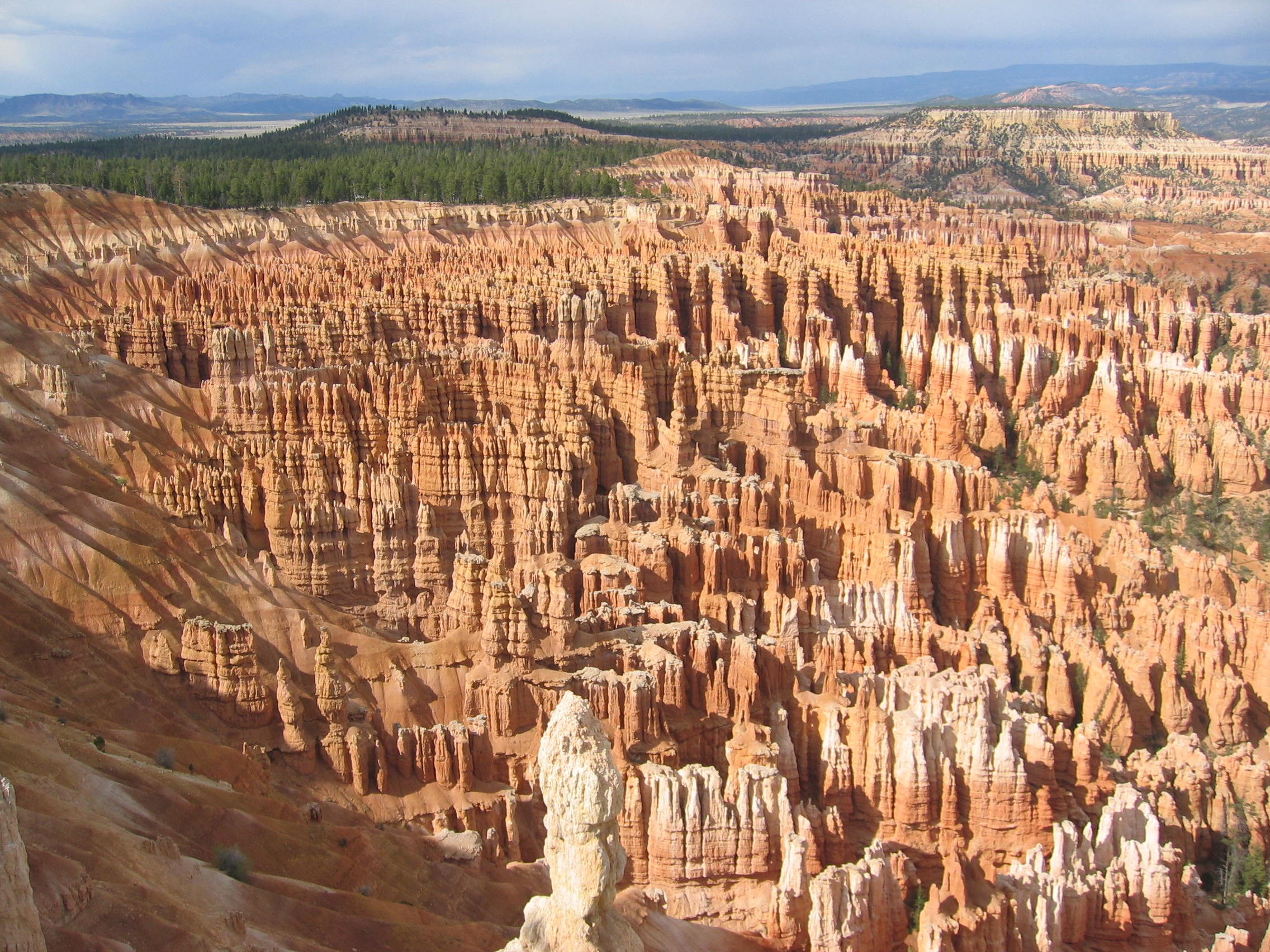
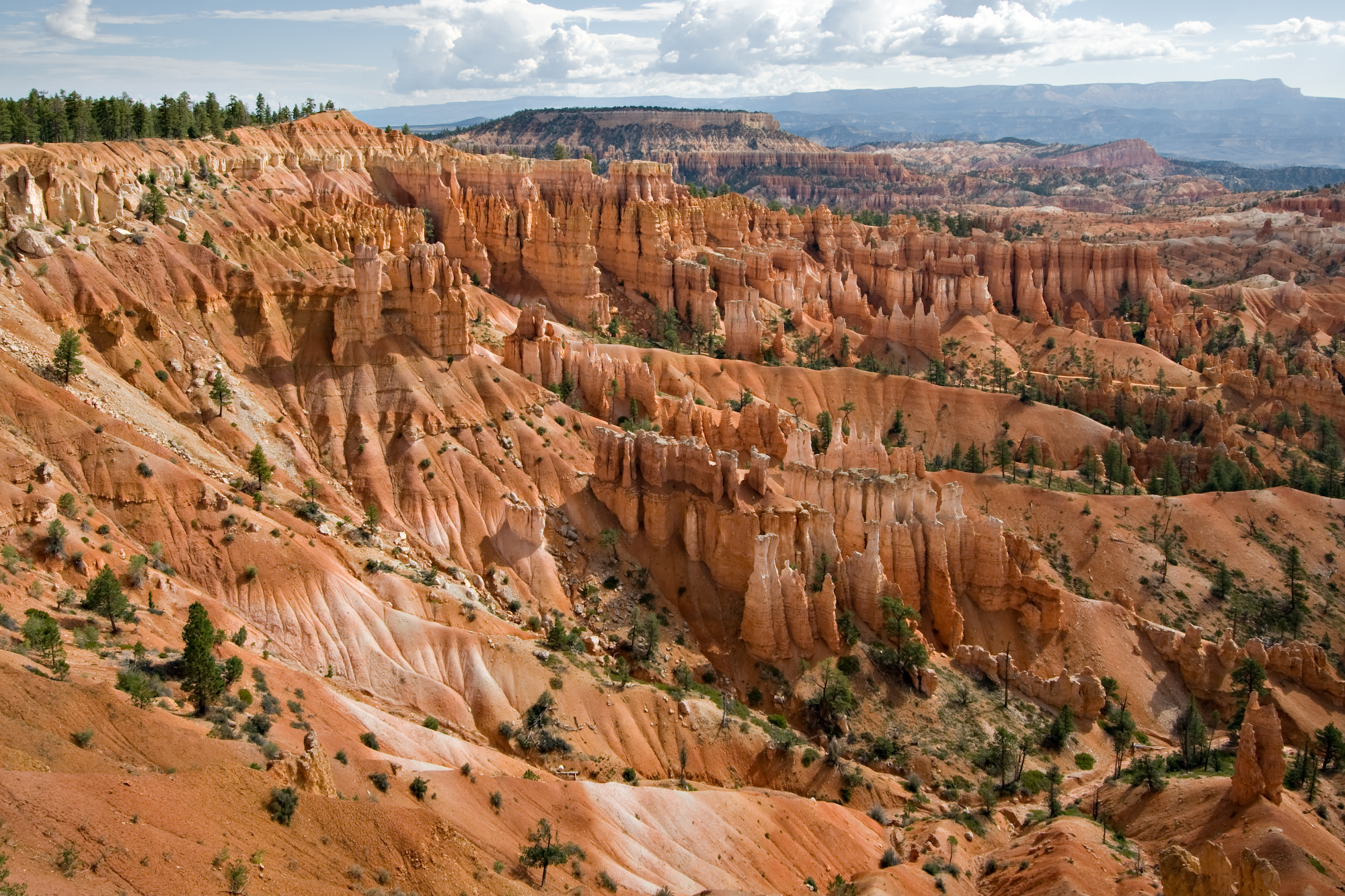

The Bryce Amphitheater is the largest, most famous, and most visited amphitheater in the park. This massive horseshoe-shaped natural bowl stretches roughly 12 miles long, 3 miles wide, and 800 feet deep below the rim. It contains the densest concentration of hoodoos in the park and is home to all four primary viewpoints: Sunrise Point, Sunset Point, Inspiration Point, and Bryce Point.
The amphitheater was once the site of ancient Lake Claron. The sediments deposited in this ancient lake eventually became the Claron Formation limestone that now forms the hoodoos. Most popular trails — including the Navajo Loop, Queen's Garden, and Peekaboo Loop — descend into this amphitheater.


👁️ Viewpoints — The Best Vantage Points
Bryce Canyon offers 13 viewpoints along the scenic drive, but the four main viewpoints along the Bryce Amphitheater rim are the most popular and accessible. Each offers a unique perspective on the hoodoo landscape.
Sunrise Point
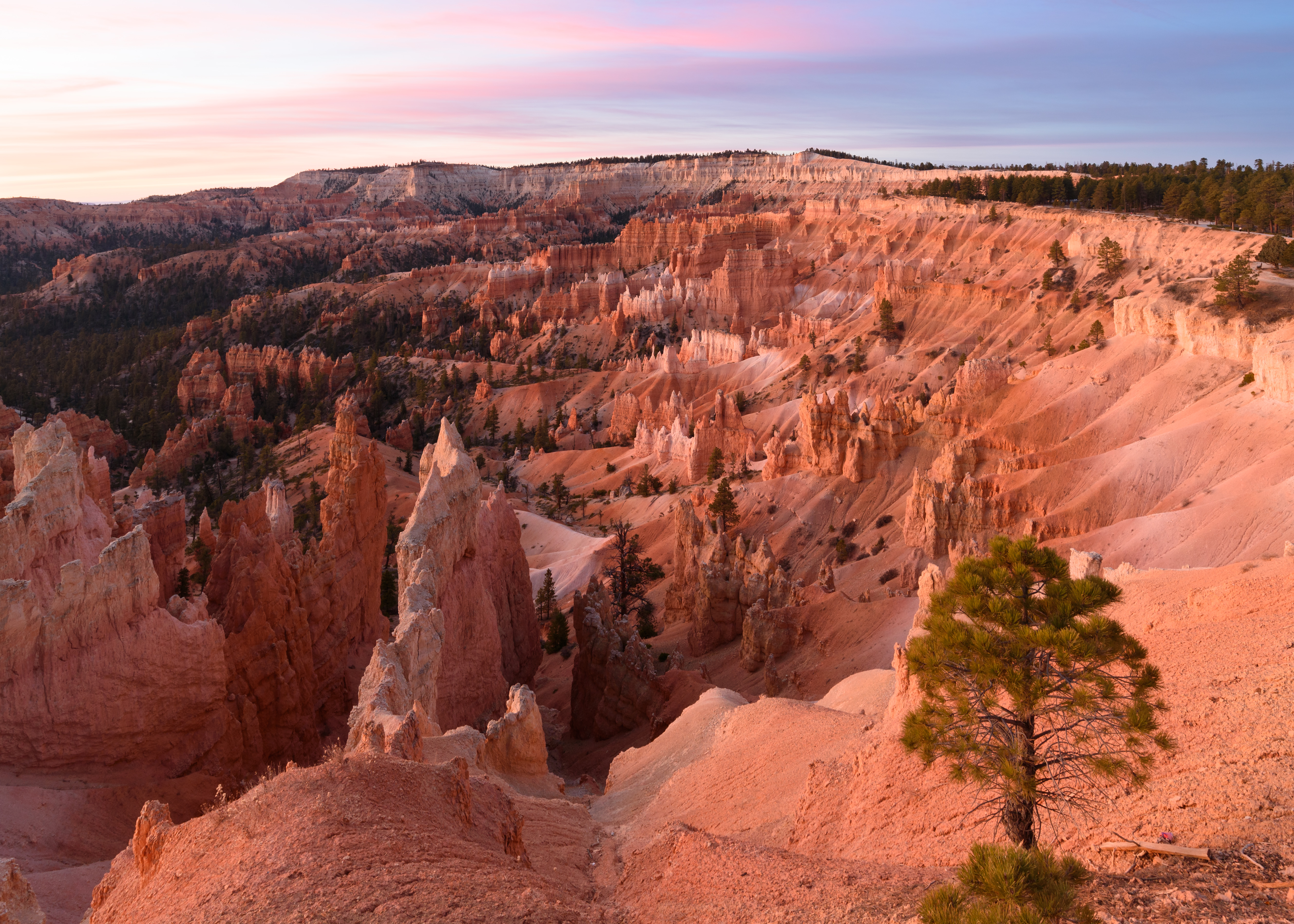
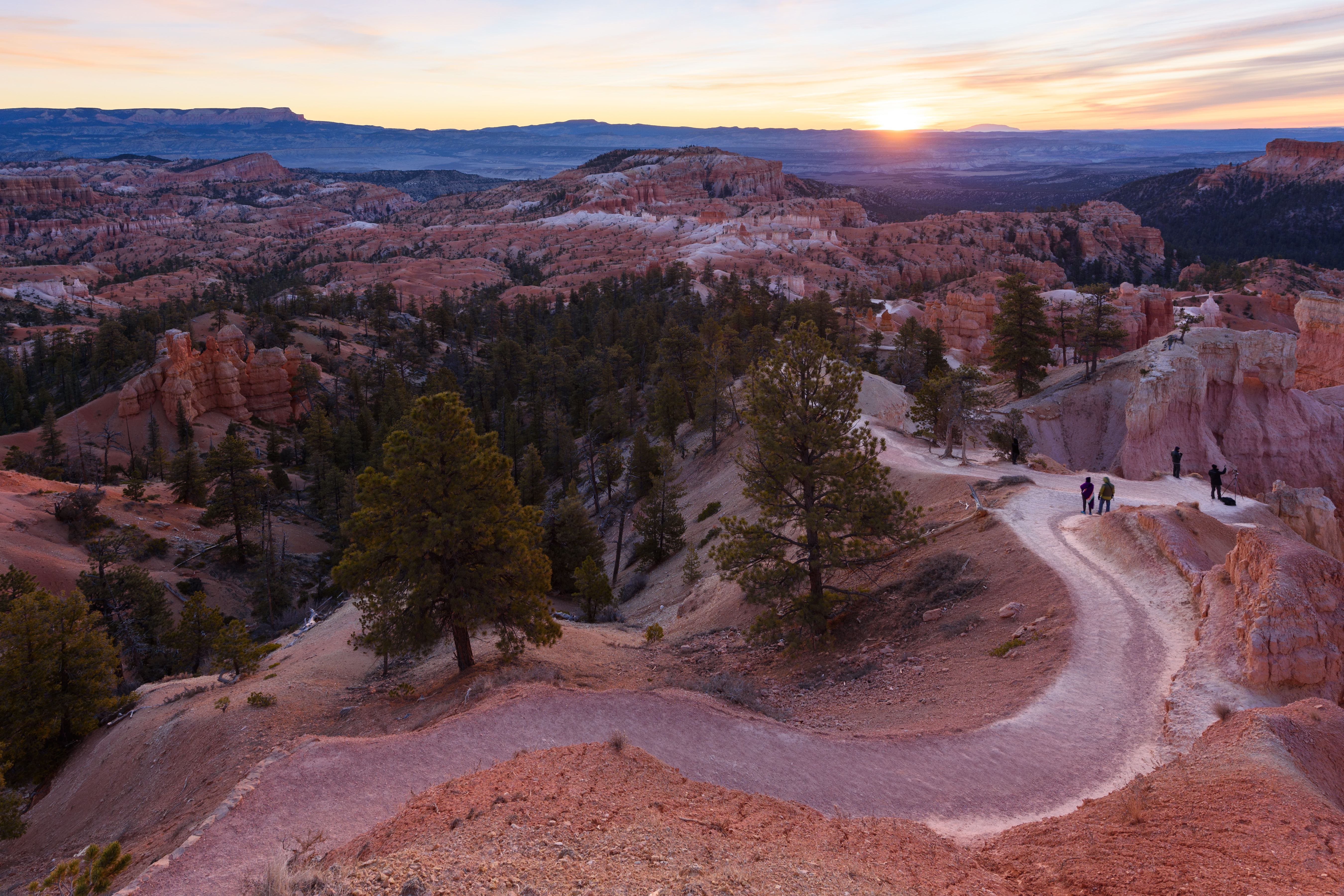
Sunrise Point is the most accessible viewpoint and arguably the best overall overlook. This is the starting point for the Queen's Garden Trail and one end of the popular Rim Trail. The morning light bathes the eastern-facing hoodoos in warm golden tones.
Sunset Point
Sunset Point provides the most popular viewpoint in the park, offering direct views of Thor's Hammer and the iconic Wall Street section of the Navajo Loop. The view from Sunset Point is one of the most photographed scenes in all of Utah's national parks.
Inspiration Point
Inspiration Point sits at a higher elevation, offering a broader perspective of the amphitheater. From its three viewing levels, visitors can see the densely packed “Silent City” — a vast collection of hoodoos that resembles the spires and towers of a mythical city.
Bryce Point
Bryce Point is the highest and southernmost of the four amphitheater viewpoints, providing the most comprehensive panoramic view of the entire Bryce Amphitheater. It's also the trailhead for the Peekaboo Loop Trail and starting point for the Under-the-Rim Trail.


| Viewpoint | Elevation | Best For | Accessible |
|---|---|---|---|
| Sunrise Point | 8,015 ft | Overall views, Queen's Garden trailhead | Yes (paved) |
| Sunset Point | 8,000 ft | Thor's Hammer, Navajo Loop trailhead | Yes (paved) |
| Inspiration Point | 8,100 ft | Silent City, broadest amphitheater view | Yes (paved) |
| Bryce Point | 8,300 ft | Full amphitheater panorama, sunrise photos | Yes (paved) |
🌅 Sunrise & Sunset at Bryce Canyon
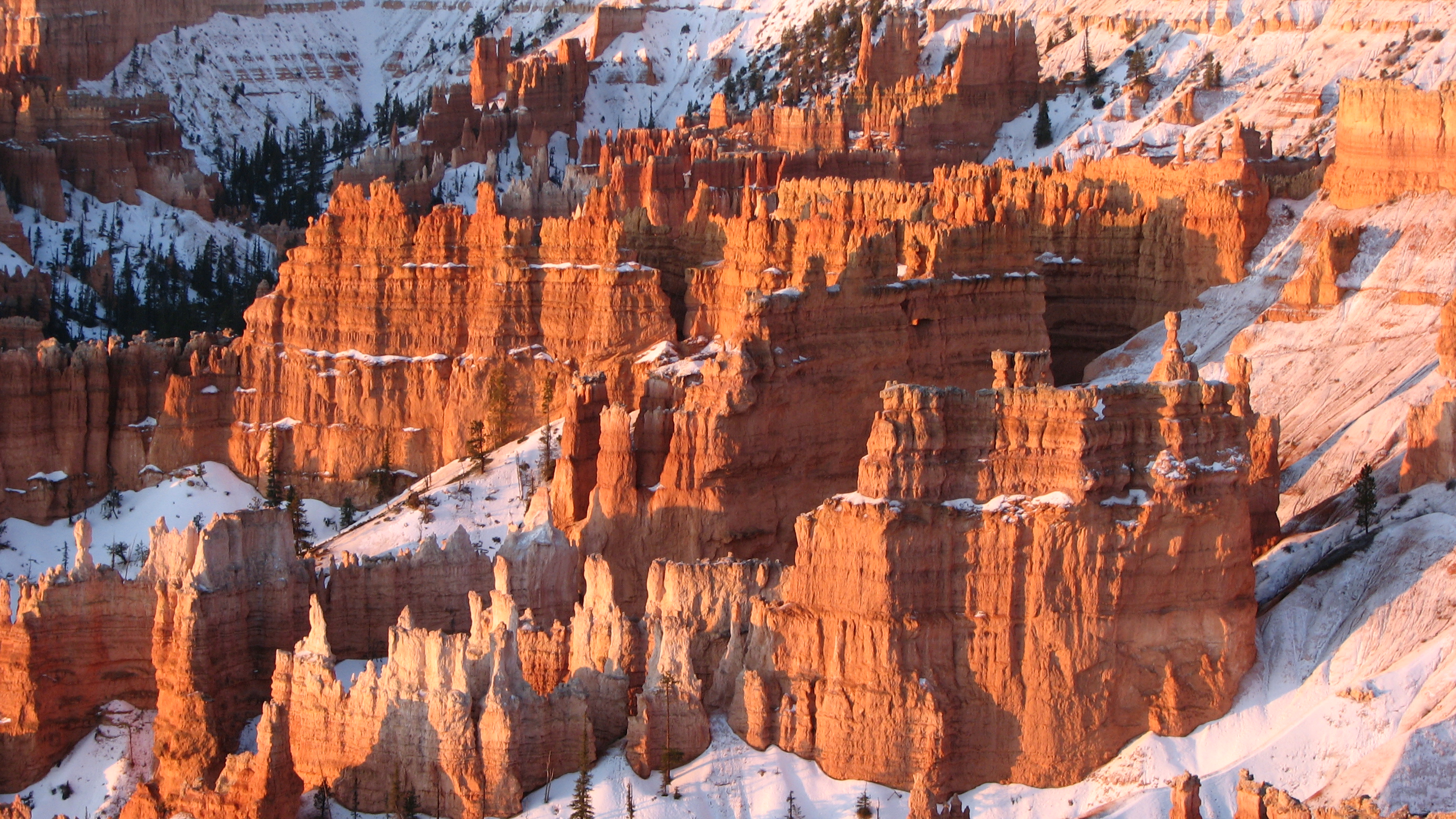
Bryce Canyon is famous for its spectacular sunrise and sunset displays. The iron-rich hoodoos glow in vivid shades of orange, red, and gold during the golden hours, creating some of the most photogenic landscapes in the American West.


🥾 Hiking Trails — Explore Below the Rim
Bryce Canyon's trail system allows visitors to descend from the rim into the heart of the amphitheater among the towering hoodoos. The park offers trails for all fitness levels, from easy paved walks to strenuous backcountry routes.
| Trail | Distance | Elevation Gain | Difficulty | Time |
|---|---|---|---|---|
| Navajo Loop | 1.3 mi loop | 550 ft | Moderate | 1–2 hrs |
| Queen's Garden | 1.8 mi RT | 320 ft | Easy–Moderate | 1–2 hrs |
| Queen's Garden / Navajo Combo | 2.9 mi loop | 550 ft | Moderate | 2–3 hrs |
| Peekaboo Loop | 5.5 mi loop | 1,500 ft | Strenuous | 3–4 hrs |
| Rim Trail | 11 mi one-way | Varies | Easy–Moderate | 4–5 hrs (full) |
| Fairyland Loop | 8 mi loop | 1,700 ft | Strenuous | 4–5 hrs |
| Mossy Cave | 0.8 mi RT | 200 ft | Easy | 30 min |
| Bristlecone Loop | 1 mi loop | 200 ft | Easy | 1 hr |
| Hat Shop | 4 mi RT | 1,500 ft | Strenuous | 3–4 hrs |
| Under-the-Rim Trail | 23 mi one-way | Varies | Strenuous | 2–3 days |
Navajo Loop Trail — The Most Popular Hike
The Navajo Loop Trail is the most popular trail in Bryce Canyon. This 1.3-mile loop descends 550 feet from Sunset Point into the heart of the amphitheater, passing directly by Thor's Hammer and through the famous Wall Street section — a narrow slot-like corridor flanked by 100-foot-high rock walls with towering Douglas fir trees.


Wall Street Section
The Wall Street section of the Navajo Loop is one of the most dramatic spots in the entire park. The trail descends through a narrow canyon corridor where the walls rise over 100 feet on either side. Two tall Douglas fir trees grow from the canyon floor, reaching skyward between the towering rock walls.


Queen's Garden / Navajo Combo — The Best Overall Hike
The Queen's Garden / Navajo Loop combination (2.9 miles) is widely considered the best hike in the park. Start at Sunrise Point, descend through Queen's Garden (passing the Queen Victoria hoodoo and Gulliver's Castle), then connect to the Navajo Loop and ascend back to the rim at Sunset Point.
📸 Photography Tips & Best Spots
Bryce Canyon National Park is one of the most photogenic national parks in the United States. The combination of thousands of colorful hoodoo formations, dramatic amphitheater views, and extraordinary light conditions creates exceptional opportunities for landscape photography.
Best Sunrise Spots
- Bryce Point — The #1 sunrise location; arrive 45+ minutes before sunrise
- Sunrise Point — Classic eastern-facing view; excellent warm light on hoodoos
- Fairyland Point — Secluded and less crowded; unique formations
- Inspiration Point (Upper) — Elevated perspective on the Silent City
Best Sunset Spots
- Sunset Point — Watch Thor's Hammer glow in the last light
- Inspiration Point — The broad view catches the alpenglow across the entire amphitheater
- Natural Bridge — A dramatic arch silhouetted against the evening sky
Camera Settings & Gear Tips
- Golden Hour: Use a low ISO (100–200), aperture f/8–f/11 for maximum depth of field
- Tripod Essential: Required for pre-dawn, post-sunset, and night sky photography
- Wide Angle Lens: 16–35mm is ideal for capturing full amphitheater panoramas
- Polarizing Filter: Reduces atmospheric haze and enhances the orange and red colors
- Winter Photography: Snow on the hoodoos creates stunning contrast — orange rock against white snow
🌌 Stargazing — A Gold Tier Dark Sky Park
Bryce Canyon National Park holds the prestigious designation of a Gold Tier International Dark Sky Park. On a moonless night at Bryce Canyon, you can see over 7,500 stars with the naked eye, compared to fewer than 200 visible from most cities. The Milky Way stretches from horizon to horizon in breathtaking clarity.
Best Stargazing Locations in the Park
- Inspiration Point — The premier stargazing spot; expansive sky canvas with hoodoo silhouettes
- Bryce Point — Dark, elevated, away from campground light; excellent for Milky Way photography
- Sunset Campground — Ranger astronomy programs held here regularly spring through fall
- Visitor Center Parking Area — Used for the annual Astronomy Festival and telescope events
Annual Bryce Canyon Astronomy Festival
Each June, Bryce Canyon hosts its famous Astronomy Festival — a multi-day event featuring guided stargazing sessions, telescope viewing, ranger-led sky programs, and presentations by professional astronomers. The park also offers approximately 100 astronomy programs per year.
📅 Seasonal Guide — Best Time to Visit
Bryce Canyon is open year-round but offers dramatically different experiences in each season. The park's high elevation (averaging 8,000 feet) gives it a much cooler and snowier climate than nearby Zion or Grand Canyon.
| Season | Weather | Crowds | Highlights |
|---|---|---|---|
| Spring (Apr–May) | 40–65°F, some snow | Moderate | Wildflowers, melting snow on hoodoos, migratory birds |
| Summer (Jun–Aug) | 55–80°F, PM storms | Peak crowds | All trails open, astronomy festival, ranger programs |
| Fall (Sep–Oct) | 35–65°F, crisp | Moderate | Brilliant fall foliage, clearest skies, smaller crowds |
| Winter (Nov–Mar) | 10–40°F, heavy snow | Lightest crowds | Snow-capped hoodoos, snowshoeing, cross-country skiing |
Winter at Bryce Canyon — A Magical Experience
While many visitors overlook Bryce Canyon in winter, it is arguably the most visually stunning season. The contrast of brilliant orange and red hoodoos dusted with white snow creates a uniquely surreal landscape. The park rents snowshoes at the visitor center, and the Rim Trail and Fairyland Loop are popular winter routes.


🗺️ Visitor Planning — Fees, Permits & Getting There
Entrance Fees 2026
| Pass Type | Cost | Valid |
|---|---|---|
| Private Vehicle | $35 | 7 days |
| Motorcycle | $30 | 7 days |
| Walk-in / Cyclist | $20 per person | 7 days |
| America the Beautiful Pass | $80/year | All federal lands |
| Non-US Resident Surcharge (16+) | +$100 | Per person |
Getting There
- From Salt Lake City: 270 miles south via I-15 and US-89 — approximately 4 hours
- From Las Vegas: 270 miles northeast via I-15 and US-89 — approximately 4 hours
- From Zion National Park: 80 miles northeast via UT-9 and US-89 — approximately 1.5 hours
- From Grand Canyon South Rim: 250 miles northwest — approximately 4 hours
- Nearest Airport: St. George Regional Airport (SGU) — 90 miles, or Salt Lake City International (SLC) — 270 miles
Where to Stay
- The Lodge at Bryce Canyon — The only lodging inside the park; historic 1920s property; book 6+ months in advance for peak season
- Bryce Canyon City — Several hotels and motels just outside the park entrance
- North Campground — Inside the park; open year-round; reserve at Recreation.gov
- Sunset Campground — Inside the park; open May–October; reserve at Recreation.gov


❓ Frequently Asked Questions
Bryce Canyon contains thousands of hoodoos — the world's largest collection of natural stone spires. These formations are concentrated across 12 natural amphitheaters along the eastern edge of the Paunsaugunt Plateau. No exact count exists because new hoodoos are always forming while old ones erode.
The entrance fee is $35 per private vehicle (valid for 7 days), $30 for motorcycles, and $20 per person for walk-ins/cyclists. The America the Beautiful annual pass ($80) covers all national parks. Non-US residents aged 16+ must pay an additional $100 surcharge.
Thor's Hammer is the most iconic formation — a tall hoodoo with a distinctive hammer-shaped capstone visible from Sunset Point and along the Navajo Loop Trail.
The Queen's Garden / Navajo Loop combination trail (2.9 miles, moderate) is considered the best overall hike. For longer adventures, the Fairyland Loop (8 miles) and Peekaboo Loop (5.5 miles) are outstanding.
Spring (April–May) and fall (September–October) offer the best weather with mild temperatures. Winter brings snow-capped hoodoos and the smallest crowds — an underrated season for photography.
Yes! Bryce Canyon is a certified Gold Tier International Dark Sky Park. On a moonless night, you can see over 7,500 stars and the Milky Way stretching from horizon to horizon.
Bryce Canyon is located in southwestern Utah on the eastern edge of the Paunsaugunt Plateau, about 80 miles northeast of Zion National Park and 270 miles south of Salt Lake City.
The main scenic drive is 36 miles round trip. Without stops, about 45 minutes each way, but plan 3–4 hours with viewpoint stops and short walks. Plan a full day to include a below-rim hike.
Dogs are allowed only on paved surfaces, in parking areas, at campgrounds, and along the paved Rim Trail between Sunrise and Sunset Points. Dogs are NOT allowed on any unpaved hiking trails.
No timed-entry reservations required. The park is open 24/7. Campground reservations at North and Sunset Campgrounds are highly recommended during peak season (May–October).
📖 References, Sources & Copyright Compliance
Official Sources: National Park Service — nps.gov/brca | USGS — usgs.gov | Visit Utah — visitutah.com | Recreation.gov — recreation.gov
Images: All photographs in this guide are sourced from Wikimedia Commons and used under their respective Creative Commons licenses (CC BY, CC BY-SA, CC0, or Public Domain). Full attribution is provided with each image.
Tourism Data: Bryce Canyon Country — brycecanyoncountry.com | International Dark-Sky Association — darksky.org
Copyright Notice: This guide is published by nearme.help under editorial fair use. All factual data is sourced from official government and verified tourism resources. Wikimedia Commons images are used in compliance with Creative Commons license terms.
Editorial Disclaimer: Trail conditions, fees, permit requirements, and operating hours may change. Always verify current information at nps.gov/brca before your visit. Last verified: March 2026.
📖 About This Guide — Editorial Standards & E-E-A-T Compliance
Experience: This guide was compiled by the nearme.help Experienced Writing Team, who have directly researched and documented Utah's national parks, hiking trails, and geological formations.
Expertise: Our team includes professional travel writers, outdoor recreation specialists, photography guides, and experienced national parks content creators.
Authoritativeness: All data is cross-referenced from official NPS sources, USGS geological publications, Wikimedia Commons, Visit Utah tourism office, and the International Dark-Sky Association.
Trustworthiness: This guide is regularly updated, fact-checked against primary government sources, and published under clear editorial standards. Last verified: March 2026.
📧 Corrections & Updates: If you find any inaccuracies, contact our editorial team at www.nearme.help.
© 2026 nearme.help — Experienced Writing Team. All rights reserved.
This article contains 30+ images from Wikimedia Commons used under Creative Commons licenses with proper attribution.
For corrections or inquiries, visit www.nearme.help
